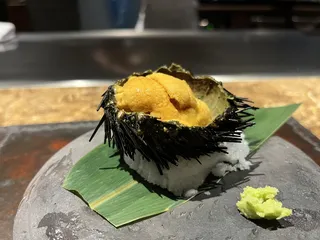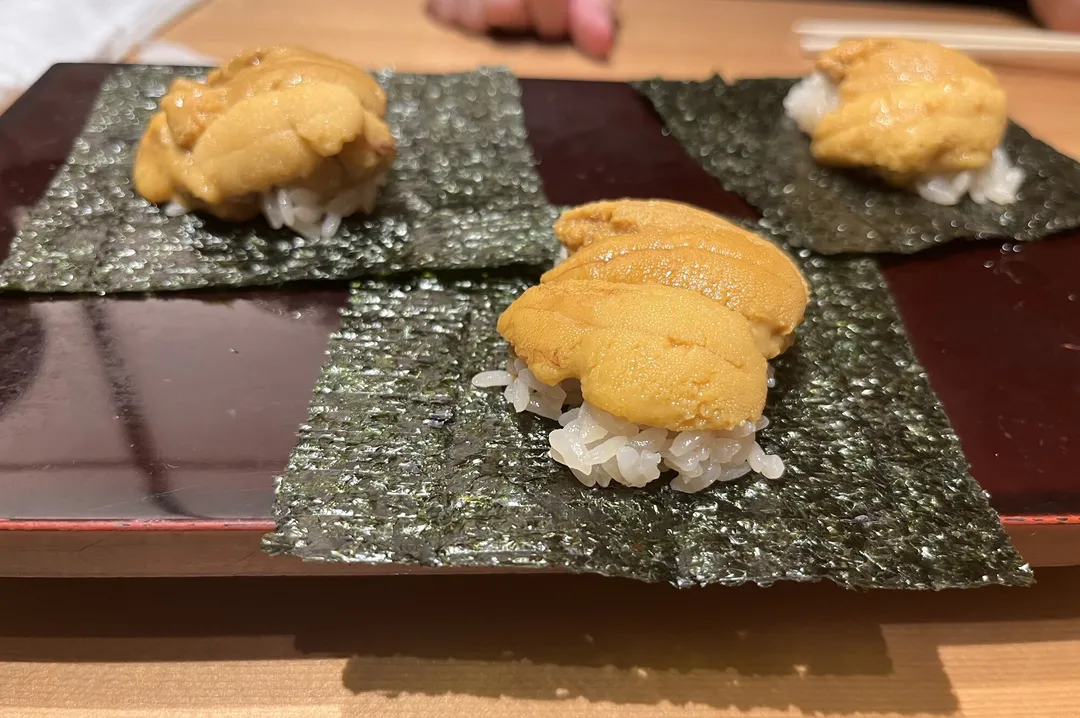
When you sit down at the counter of a sushi restaurant, you may hear words fly back and forth between the chef and other customers that you don't often come across elsewhere. You might already know terms like ‘shari’ or ‘gari,’ but words such as ‘agari,’ ‘murasaki,’ or ‘oaiso’ can leave some people feeling a little unsure.
Here, we've put together the words used in sushi restaurants, starting with the basics. The first thing worth mentioning is that many of these are originally fuchō — insider terms used among chefs themselves. There's no need for customers to force themselves to use them; as long as you understand the meaning, ordinary words are more than enough to place an order. Think of this as light preparatory reading, and relax as you go through it.
Basic terms
- Shari (vinegared rice)
- Sumeshi, or vinegared rice — rice that has been cooked and mixed with seasoned vinegar, forming the base of sushi. The name is said to come from busshari, the white relics believed to be the Buddha's remains, likening the grains of rice to them.
- Neta (topping)
- The fish and other seafood placed on top of the shari. The word is said to be tane (ingredient) read backwards.
- Nigiri
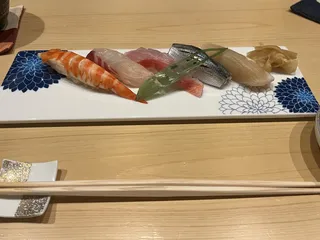
- Shari pressed by hand and topped with neta — the most common form of sushi. Its formal name is nigiri-zushi.
- Ikkan
- The unit used for counting pieces of nigiri-zushi. However, whether one ikkan refers to one piece or two isn't clearly settled — it varies by restaurant and region. If you want to be sure the number gets across, it's safer to say ‘one piece’ or ‘two pieces.’
- Gunkan-maki (battleship roll)
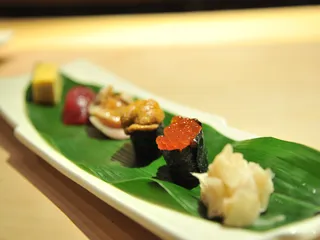
- Sushi in which nori is wrapped around the side of the shari, topped with ingredients that are hard to place directly, such as salmon roe or sea urchin. It's said to get its name because the nori wrapped around it resembles a warship.
- Makimono (rolled sushi)
- The general term for sushi in which shari and neta are rolled together in nori. Thin rolls are called hoso-maki, and thick rolls are called futo-maki.
- Gari
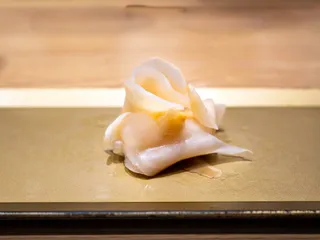
- Ginger pickled in sweet vinegar. It refreshes the palate, making it easier to taste the next piece. The name is said to come from the crunching ‘gari-gari’ sound made when biting into it.
- Sabi (wasabi)
- Another word for wasabi. Asking for ‘sabi-nuki’ gets you nigiri made without wasabi.
- Tsume
- A sweet, thickly reduced sauce made from soy sauce, brushed onto neta such as conger eel or eel. The word is short for ni-tsume; you don't add soy sauce to neta that already have this sauce on them.
Terms for types of neta
- Akami (red meat)
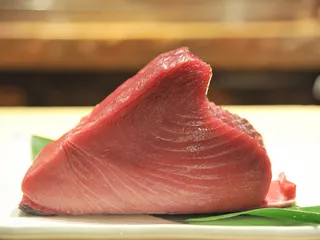
- Fish with red flesh, such as tuna or bonito. For tuna in particular, this can specifically refer to the leaner cuts from the back.
- Shiromi (white fish)
- Fish with white flesh, such as red sea bream, Japanese sea bass, or flounder. Many are light and refined in flavour, and it's generally considered good to eat them before richer-tasting neta.
- Hikarimono (shiny-skinned fish)
- Fish with silvery, shining skin, such as gizzard shad, horse mackerel, sardine, or mackerel. Many are prepared by curing in vinegar or salt, and they're said to be toppings where a chef's skill really shows.
- Chutoro / Otoro
- The fatty belly portion of tuna. The fattier of the two is called otoro, and the slightly leaner one chutoro; together with akami, they're considered the three faces of tuna.
- Zuke (marinated)
- Akami and similar cuts of tuna marinated in a soy-sauce-based sauce. This traditional Edomae technique developed as a way to preserve fish in the days before refrigerators.
- Aburi (seared)
- Neta with the surface lightly seared using a torch or over charcoal. This adds a toasty aroma and brings out the fragrance of fatty neta even more.
Terms useful for ordering or reserving
- Okonomi (à la carte)
- A way of ordering in which you choose the neta you want to eat yourself, one piece at a time. Saying ‘okonomi de’ lets you order freely, starting with whatever catches your eye.
- Omakase
- A way of ordering in which, rather than choosing from a menu, you leave the day's recommendations and the order of serving up to the chef. The appeal is being served seasonal neta in the ideal sequence.
- Jika (market price)
- A notation sometimes written on a menu in place of a price, meaning the price changes according to the day's market purchase cost. If it concerns you, there's nothing wrong with asking the price before ordering.
- Gyoku (tamago sushi)
- Sushi topped with rolled egg. The word is short for tamago. Some connoisseurs even say you can judge a restaurant's skill by how well the tamago is made.
Terms used among sushi chefs. Trivia you don't need to know at all.
- Agari (tea)
- Another word for tea. Since this is purely staff terminology, it's more than enough for customers to simply ask for ‘ocha’ (tea).
- Murasaki (soy sauce)
- Another word for soy sauce. It's said to be called ‘murasaki,’ meaning purple, because of its colour. This too is originally staff terminology — ‘oshoyu’ (soy sauce) works perfectly well.
- Namida (wasabi)
- Another word for wasabi. It's said to come from the fact that too much of it can bring tears (namida) to your eyes. ‘Wasabi’ works just fine — almost no one, even among Japanese people, actually calls it namida.
- Oaiso
- Another word for the bill. It's said to originate from restaurant staff presenting the bill while saying something like, ‘I'm sorry to be so unamiable (aiso-zukashi), but may I ask for payment,’ so it was never really meant to be a word customers themselves would use. It's more natural for a customer to say ‘okaikei’ or ‘okanjo’ (the bill).
- Tsukeba
- The workspace behind the counter where the chef prepares the sushi.