Many people may feel that sushi restaurants, especially counter-style ones, seem to have somewhat strict rules of conduct. But there's really no need to feel too tense about it. What we're describing here are less like fixed rules and more like an extension of consideration for the restaurant and the other customers around you. There isn't a single ‘correct’ answer when it comes to manners; please read this simply as a bit of guidance for paying a little attention so that everyone can enjoy a pleasant time.
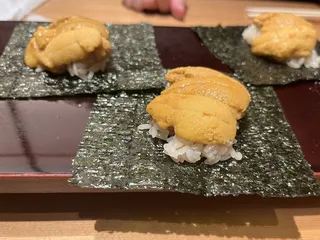
Hands or chopsticks? — It's fine to eat nigiri-zushi with either your hands or chopsticks. Sushi originally became popular as food you picked up and ate with your hands, and some people say it's less likely to fall apart and is easier to eat that way. On the other hand, many people, especially women, prefer chopsticks because they'd rather not get their hands dirty, and these days most people eat with chopsticks. Incidentally, at restaurants that serve an omakase course, it's common for temaki-zushi (sushi such as sea urchin wrapped in nori by hand) to be handed to you directly. In that case, just take it with your hands and eat it — there's no need to insist on receiving it with chopsticks.
Eat it soon after it's served — For each piece of nigiri, the chef adjusts the temperature and how firmly it's pressed just for that single bite. As time passes, the warmth of the rice and the flavour of the topping gradually change, so eating it as soon as possible after it's placed in front of you is both the tastiest way to enjoy it and a natural way of showing respect to the person who made it. It's best to avoid getting so caught up in conversation that you leave your sushi sitting there.
Being mindful of scent — Sushi is a food meant for enjoying delicate flavours and aromas. For that reason, it's considered best to go easy on strong perfume or cologne, since it can affect the taste experience not only for you but also for the customers sitting next to you. For the same reason, it helps to be a little mindful of strongly scented hand cream and the like. There's no need to overthink it — just remember to keep the scent subtle.
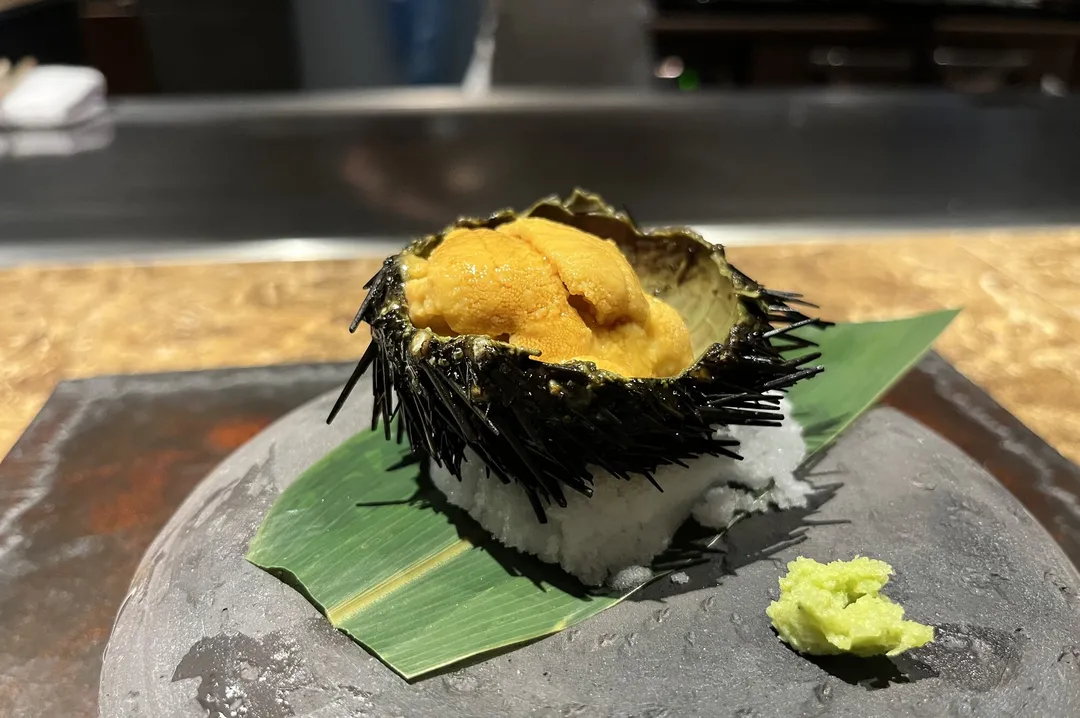
When taking photos — It's easy to understand the urge to capture a beautiful piece of nigiri in a photo, and most restaurants don't mind you taking pictures. Still, there are a few things you can keep in mind for a pleasant shoot. First, go easy on the flash, since it can easily bother other customers. And, tying back to the point above about eating it soon after it's served, it's smarter to snap just one quick shot rather than spending a lot of time on photos and leaving the sushi sitting there. Avoid framing shots so that the chef's hands or other customers across the counter end up in the picture, and if you're unsure at a particular restaurant, it's reassuring to simply ask, ‘May I take a photo?’ Some restaurants do prohibit photography, so it's worth checking in advance.
How to talk to the chef — At the counter, you're seated close to the chef, and conversation is part of the enjoyment. That said, there's no need to strain yourself trying to say something clever. A simple, honest remark like ‘This is delicious’ or ‘What kind of fish is this?’ is more than enough to warm up the atmosphere. If you ask about a topping's season or for a recommendation, the chef will often be happy to explain in detail. You don't need to force yourself to use technical terms, either — asking honestly about anything you don't understand tends to be appreciated all the more.
When there's a topping you can't eat — Everyone has their own circumstances, whether it's a topping you don't like, an allergy, or simply not being comfortable with raw food. In these cases, it's best to speak up early without hesitation. At an omakase restaurant, if you mention right when you sit down that, say, ‘I'm not keen on shellfish’ or ‘Please leave out the wasabi,’ the chef will happily accommodate you by swapping in a different topping. Allergies in particular are a separate matter from taste preference, so being clear about them puts everyone at ease. Adding a quick word is far smarter than silently leaving food on your plate.