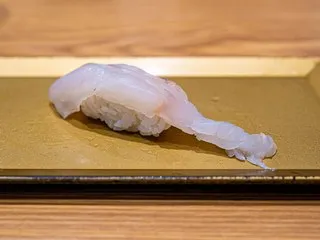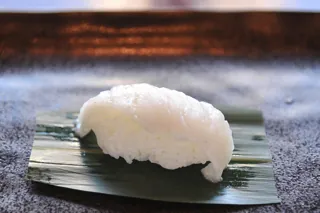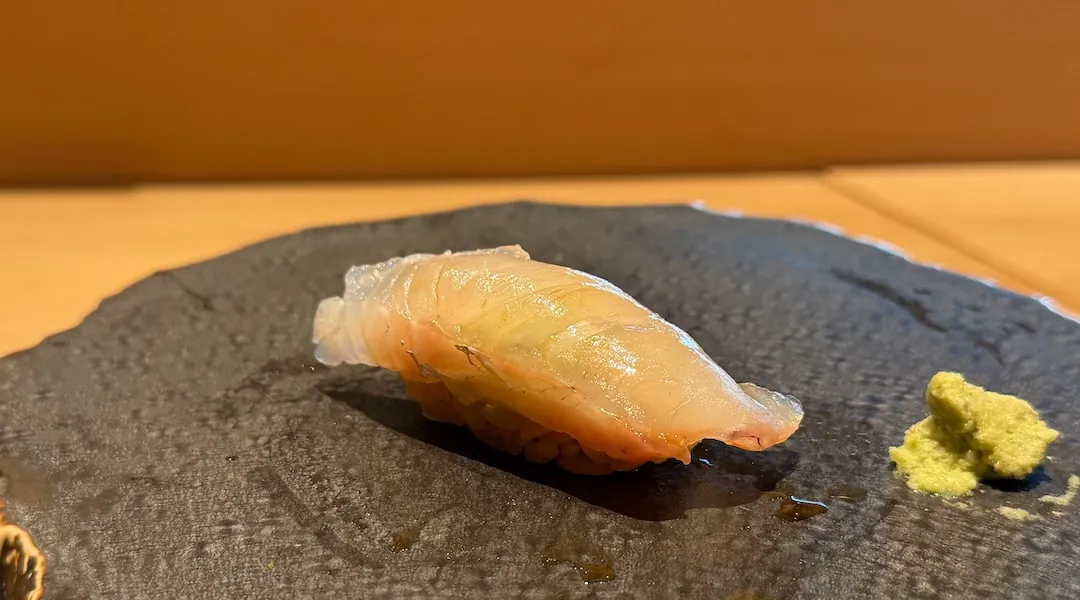
Suzuki 鱸
What fish is Suzuki?
You may have pictured Ichiro Suzuki of the Seattle Mariners.
Japanese sea bass (suzuki)
The second most common surname in Japan
You may have pictured Ichiro Suzuki of the Seattle Mariners. But this Suzuki is neither the baseball player nor the Suzuki that builds the Hayabusa motorcycle — it's the fish, suzuki (Japanese sea bass). Why are there so many people named Suzuki in Japan in the first place? Among Japanese family names, Suzuki ranks as high as number two. (For the record, Sato is first and Takahashi third.) The surname Suzuki originated in Wakayama, where piling up ears of rice was once called "susuki." That later became "Suzuki" and came to be written with the characters 鈴木 ("bell tree"). Then, in medieval times, the monks and Shinto priests who set out from Wakayama across the country to spread the Kumano faith (Shugendō) took the Suzuki name themselves — or granted it to people in the places where they preached. That, it is said, is why the Suzukis multiplied so prolifically. The fish, on the other hand, is written 鱸, which has nothing to do with the 鈴木 of the surname. One theory holds that Edo-period people named it so because "its flesh is white, as though rinsed clean (susugi)," but there seems to be no settled explanation. Either way, the Japanese just seem to love the sound "Suzuki." Everyone wants an excuse to say Suzuki.
That was quite a long preamble — but how popular is suzuki as sushi? Sadly, not many Japanese are devoted fans of suzuki sushi. As a white-fleshed fish its flavour is rather plain; it can be coaxed along by curing in salt or with kombu-jime to draw out umami, yet next to the star-class fish its taste may not exactly stand out. That said, it is by no means bad — high-end sushi restaurants do work it into their omakase courses, and in season it grows rich with fat and turns wonderfully delicious.
Origin: Chiba, Aichi, Mie, and others Season: Summer