Even within the category of ‘sushi restaurant,’ the way you order can differ quite a bit depending on the type of establishment. Knowing these differences in advance should help you feel more at ease the first time you step into a counter-style shop, or when you are guiding visitors from abroad.
Broadly speaking, sushi restaurants in Japan fall into three styles: ‘omakase,’ where you leave the choices to the restaurant and its chef; ‘okonomi’ (à la carte), where you choose each piece yourself; and ‘kaiten-zushi,’ the conveyor-belt chain format. Let's go through each of these in turn.
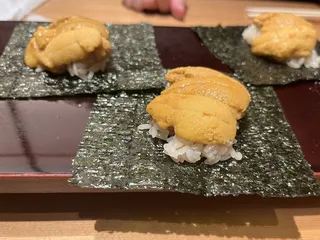
Omakase — Omakase is a style in which the chef decides the order and number of pieces to serve, based on the day's catch and the season. It is closer to a set course meal. At some restaurants, sushi is not the only thing on offer; a signature side dish or some sashimi is often served between pieces, letting you enjoy each restaurant's own particular character. Generally speaking, the more upscale a restaurant is, the more likely it is to offer omakase as the only option. Even with a fully omakase meal, some restaurants let you order extra pieces of sushi you'd still like to eat at the very end.
Some restaurants also offer several omakase courses at different price points. At restaurants where omakase is the main format, you usually decide which type of omakase you want in advance, much as you would when making a reservation. If you weren't asked about this when booking, it usually means there is only a single omakase course on offer.
For omakase, the price is generally posted online, so you can check it beforehand; however, some high-end restaurants use what is called ‘jika’ (market price), with dynamic pricing that depends on that day's purchase cost. In that case you won't know the price in advance, so it's best to book only if you have some financial leeway.
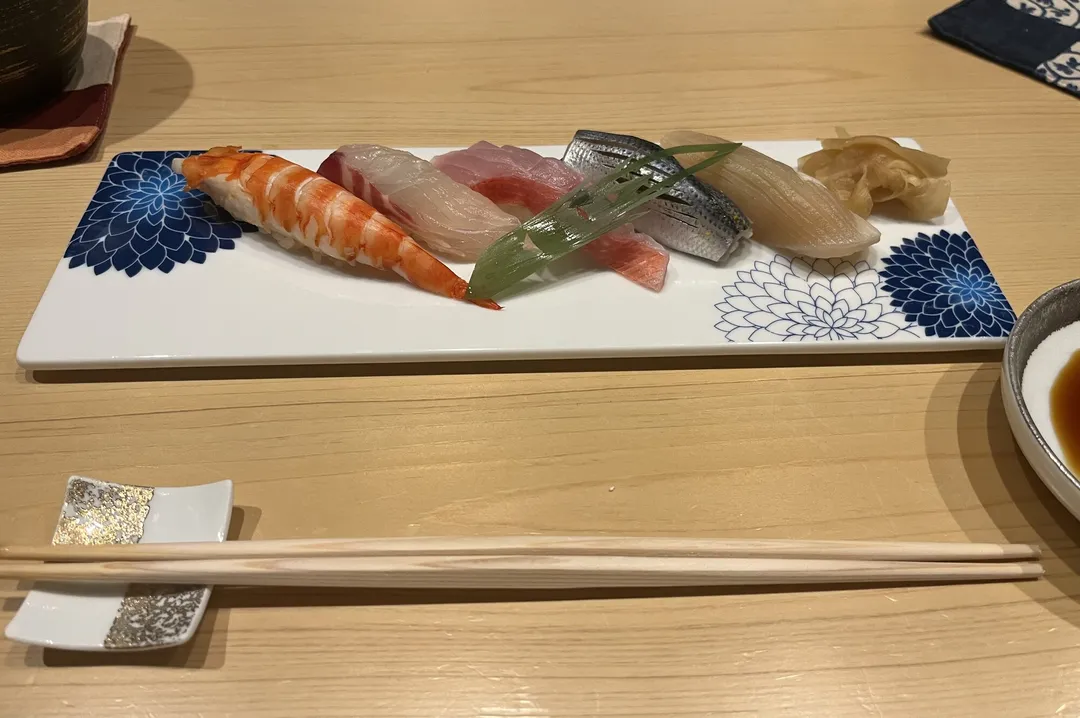
Ordering okonomi (à la carte) — Okonomi is a style in which you choose the toppings you want to eat yourself, piece by piece. The appeal is being able to order at your own pace while looking at the display case or the menu, thinking something like ‘let's start with white fish’ or ‘next, something shiny-skinned.’ This is the dominant style at mid-priced restaurants. You can order verbally, but at many restaurants you write your order down on paper.
If you're unsure what to order okonomi-style, it's a good idea to ask the chef, ‘What do you recommend today?’ At many restaurants the day's seasonal toppings are also written up on the wall or on the menu, so try choosing from there. If you hear the name of a seasonal topping but can't quite picture what it tastes like, try looking it up in Sushi Guide.
Enjoying kaiten-zushi — Kaiten-zushi is a style where you enjoy yourself by freely picking up plates as they pass by on the conveyor belt, or by ordering through the touchscreen at your table. Compared with counter restaurants, it's more casual, which makes it an easy choice for families or when you're out travelling. However, since the global spread of coronavirus from 2020 onward, the style in which sushi constantly circulates on the belt has sharply declined, and many restaurants have now switched to touchscreen ordering only.
If you're taking plates off the belt, feel free to simply pick up whatever looks good to you. If the topping you want doesn't appear, you can also order a freshly made piece via the touchscreen or by asking a member of staff. Because kaiten-zushi restaurants are popular with families, they offer all kinds of menu items beyond traditional sushi. Many restaurants let you order things children love, such as hamburger steak, French fries, or ramen.
As a general rule, every restaurant has powdered tea (agari) and a hot water tap set up on the table, so you can help yourself freely. Gari (pickled ginger) is also set out on the table, and you can eat as much as you like. As a side note, the major kaiten-zushi chain ‘Kura Sushi’ stopped offering ginger a few years ago and switched to gari made from daikon radish instead. Opinions among Japanese people are divided on this, but since it's less spicy than ginger, it seems to be popular with children. Enjoying these little differences between restaurants is something I'd recommend too.
When you want the bill, at most restaurants it's enough to press the ‘pay’ button on the touchscreen. You can also settle up by bringing the table number tag or your receipt to the payment counter. More and more restaurants these days let you complete the entire payment process without any staff involved.