Miru-gai ミル貝
What is Miru-gai?
What on earth is the 'miru' in mirugai?
Gaper clam
Honmiru? Or shiromiru?
What on earth is the 'miru' in mirugai? Many people probably don't know. Written in kanji as '海松' and read 'miru', it is a kind of seaweed — that is, a plant. Miru (this seaweed) grows on the siphon of the mirugai, and because the clam looked as though it was eating the miru, it came to be called 'mirukui' (miru-eater) or 'mirukuigai' (miru-eating clam).
Two kinds of mirugai are served as sushi: the true 'mirugai (海松貝)' and 'shiromiru (白海松)'. Shiromiru only looks similar — it is a completely different clam, a so-called substitute. To tell them apart, the genuine one is also called 'honmiru'.
Honmiru is said to take more than 15 years to reach an edible size, and only the protruding siphon is used for sushi. A single clam yields just one or two pieces, making it an ultra-premium topping. So you are safest assuming that the mirugai you usually see at casual sushi restaurants is 99% shiromiru.
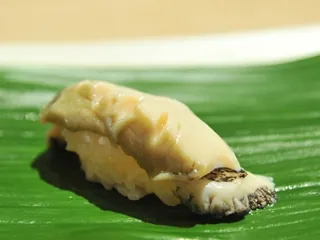
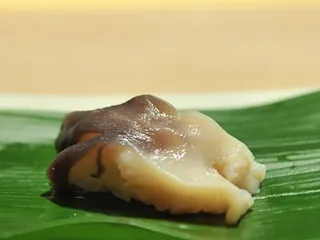
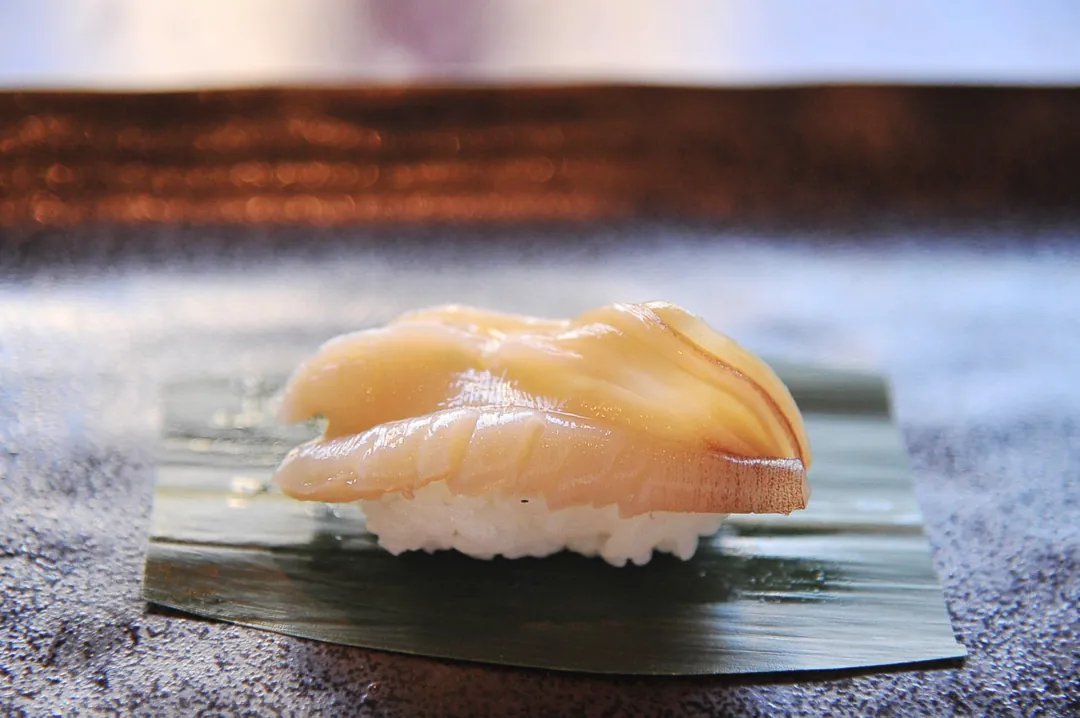
The photograph on this page is shiromiru, but it has a gentle, crisp bite and a distinctive sweetness, making it a very delicious clam in its own right.
Origin: All over Japan Season: From winter into spring